
Joliet hospice cares for non-hospice patients with chronic illness
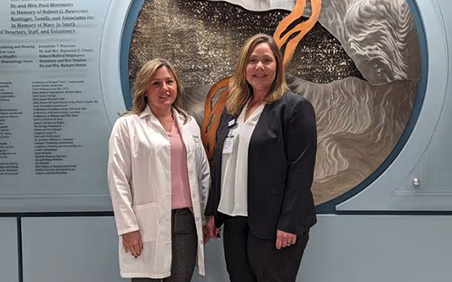
Lightways Hospice and Serious Illness Care in Joliet has a serious illness care program for people with advanced, chronic or life-limiting illnesses. Nicole Hartley, lead nurse practitioner for Lightways’ serious illness care program (left) and Lisa Heiy, director of Lightways’ serious illness care (right) pose in front of the donor wall on Monday, March 4, 2024, at Lightways in Joliet. (Denise Unland)
Medicare and most insurance companies cover serious illness care through Lightways
A Joliet hospice provides more than just hospice care
Lightways Hospice and Serious Illness Care in Joliet – formerly known as Joliet Area Community Hospice – also has a serious illness care program for people with advanced, chronic or life-limiting illnesses.
Lisa Heiy, director of Lightways’ serious illness care, said the independent nonprofit renamed its palliative care program to serious illness care at the time of its rebranding in 2021 to clearly describe the program and its services.
“Not many people really understood the term ‘palliative care’,” Heiy said. “It’s basically symptom management. If we have a patient diagnosed with cancer, we don’t treat the cancer. We treat the symptoms.”
Heiy said Lightways had 1,037 adults in its serious illness care program in 2023. Medicare and most insurance companies cover serious illness care through Lightways, according to the Lightways website.
Lightways cares for patients with a variety of serious illnesses. These include cancer, cardiac diseases — such as congestive heart failure — chronic obstructive pulmonary disease (COPD), dementia, end-stage renal disease, liver disease, amyotrophic lateral sclerosis (ALS) and HIV/AIDS, according to Heiy and the Lightways website.
The Power of Connection: Stories from Integrative Therapy
When the Music Plays, Grace Wakes Up. For Grace, music has a way of reaching her. Grace has been receiving services from Lightways Hospice and Serious Illness Care since February 2023, including nursing care, supplies, and support from the Lightways Integrative Therapy team. For more than three years, a team has supported her care, focusing not only on her medical needs but also on the things that bring her comfort and joy.
Grieving Before a Loss: Anticipatory Grief
Many people are surprised to learn that we can feel symptoms of grief before our loved one dies. We have a name for it: anticipatory grief. Anticipatory grief can be felt as soon as someone learns of a life-threatening diagnosis. Although it is like grief that is felt after someone dies, it has some unique characteristics that often take people by surprise.
Do Hospice Patients Need Hospital Care: A Caregiver’s Guide
One of the most frequent questions caregivers ask is whether a person receiving hospice care can still go to the hospital. The short answer is yes, it depends on the situation and what your goals of care are. Understanding how hospice works, and how Medicare and Medicaid coverage apply, can help caregivers feel more confident and prepared when unexpected situations arise.